Melanoma - from an ordinary birthmark to a life-threatening disease!
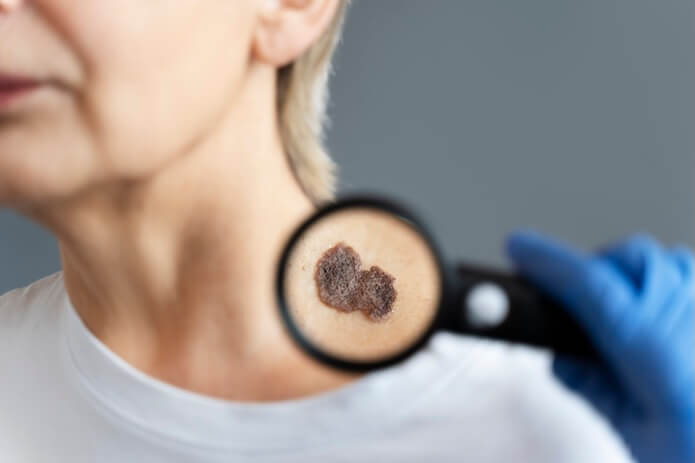
Melanoma is one of the most serious forms of skin cancer that arises from pigment cells, melanocytes. Although melanoma accounts for only about 1% of all skin cancers, it is responsible for the largest proportion of skin cancer-related deaths. Due to the aggressive nature of melanoma and its ability to spread to other parts of the body, early diagnosis and treatment are extremely important.
Melanoma is one of the most serious forms of skin cancer that arises from pigment cells, melanocytes. Although melanoma accounts for only about 1% of all skin cancers, it is responsible for the largest proportion of skin cancer-related deaths. Due to the aggressive nature of melanoma and its ability to spread to other parts of the body, early diagnosis and treatment are extremely important.
What is melanoma and how is it different from other types of skin cancer?
In dermatology, melanoma is considered a dangerous form of skin cancer not only because of its aggressiveness, but also because of its variable nature. Early detection can be life-saving, while late diagnosis is often associated with a poor prognosis.
Melanoma statistics and epidemiology
In recent decades, the number of melanoma cases has increased significantly worldwide, especially among fair-skinned people who are more sensitive to UV radiation.
- Gender and age: melanoma affects both women and men equally, although its localization may differ. In women, melanoma often occurs on the legs, and in men, on the back.
- Racial and ethnic differences: melanoma is more common in fair-skinned people, however, in dark-skinned people, it is more common in acral areas, such as under the nails or on the feet.
- Effect of residence: people who live in regions with intense sunlight, such as Australia or Florida, have a higher risk of developing melanoma.
Types of melanoma and their specific features
Melanoma is not a one-size-fits-all disease—it comes in many forms. Each form has its own clinical course, prognosis and treatment:
- Superficial spreading melanoma: the most common form, accounting for up to 70% of melanoma cases. It usually grows slowly and initially spreads at the epidermal level before penetrating the deeper layers of the skin.
- Nodular melanoma: a more aggressive form that develops faster than superficial melanoma. It is characterized by a nodular structure and often a dark color. This form can also develop on skin without moles.
- Lentigo maligna melanoma:this form usually appears on sun-damaged skin, such as the face or neck. It is more common in older patients and develops slowly from a precancerous stage called lentigo maligna.
- Acral lentiginal melanoma: a rare form that is more common on the hands, feet or under the nails. It is not related to sun exposure and occurs more often in people with darker skin.
- Mucosal melanoma: a particularly rare form that occurs on mucous membranes such as the mouth, nose or genital area. This melanoma is often diagnosed in late stages.
What causes melanoma?
The causes of melanoma are multifactorial, including both genetic predisposition and environmental influences.
- The role of UV radiation: ultraviolet (UV) radiation is a major cause of melanoma because it damages melanocyte DNA and promotes uncontrolled cell growth. This radiation can be from the sun or tanning beds. It is important to remember that repeated sunburns in childhood significantly increase the risk of melanoma in adulthood.
- Genetic factors: people with a family history of melanoma are at increased risk. Mutations in certain genes such as CDKN2A and BRAF are frequently found in melanoma.
- Weakening of the immune system: people with weakened immune systems, such as organ transplant patients or those with HIV infection, have a higher incidence of melanoma.
Symptoms: how to recognize melanoma?
Melanoma can appear as a new mole or change an existing mole. A dermatologist evaluates suspicious moles using ABCDE principle that helps distinguish melanoma from benign birthmarks:
- A (Asymmetry): asymmetry - one side is different from the other.
- B (Border): margin — irregular or jagged.
- C (Colour): color - uneven, different shades (black, brown, red, white or bluish).
- D (Diameter): diameter - usually greater than 6 mm.
- E (Evolving): changes – changes in size, shape or color.
Additional symptoms may include itching, bleeding, or pain in the mole area.
Diagnostic process in dermatology
- Clinical examination: the dermatologist visually evaluates all birthmarks and spots on the skin, paying special attention to places that are exposed to sunlight.
- Dermatoscopy: using a dermatoscope, the dermatologist carefully examines the moles to assess their structure and vascular changes.
- Biopsy: if a mole is suspicious, a skin biopsy is performed to histologically confirm the diagnosis of melanoma.
- Additional examinations: advanced-stage cases may require imaging tests such as computed tomography (CT), positron emission tomography (PET), or magnetic resonance imaging (MRI) to determine the presence of metastases.
Treatment options for melanoma
Melanoma treatment depends on its stage. Early detection greatly improves the prognosis. The following treatment methods are used in dermatology:
- Surgical excision: early-stage melanomas are usually treated with surgical excision, leaving a margin of safety around the tumor.
- Chemotherapy: although chemotherapy is used less frequently in the treatment of melanoma, it is still an option in advanced stages.
- Radiotherapy: this method is effective in treating metastases, especially if they are located in the brain or other inaccessible areas.
Prevention: How to prevent the risk of melanoma?
- Avoid sunburn: stay in the shade and wear protective clothing, especially between 10 a.m. to 4 p.m., when UV radiation is most intense.
- Use sunscreen regularly: choose a broad-spectrum SPF 30 or higher and apply every two hours.
- Avoid tanning beds: UV radiation from solariums significantly increases the risk of melanoma.
- Perform self-tests: check moles and spots on the skin once a month.
- Visit a dermatologist regularly: if a person has a large number of birthmarks or a family history of melanoma, regular visits to a dermatologist are mandatory.
Conclusions
Melanoma is a serious and potentially life-threatening condition, but early diagnosis and modern treatments greatly improve the chances of survival. As a dermatologist, I emphasize that understanding the symptoms of melanoma and taking preventative measures is the best way to reduce your risk. If you suspect suspicious moles or spots on your skin, seek professional help immediately.