Rosacea - from harmless redness to a chronic skin problem
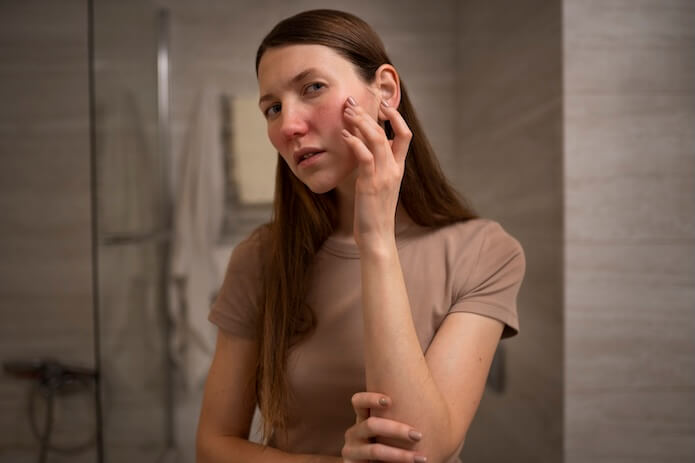
Rosacea is an inflammatory skin condition that mainly affects the central part of the face, such as the nose, cheeks, forehead and chin. It usually presents with redness, but in advanced cases, a rash, nodules or thickened areas of skin such as on the nose (rhinophyma) may also appear.
What is rosacea?
Rosacea is an inflammatory skin condition that mainly affects the central part of the face, such as the nose, cheeks, forehead and chin. It usually presents with redness, but in advanced cases, a rash, nodules or thickened areas of skin such as on the nose (rhinophyma) may also appear.
The main characteristics of rosacea:
- More common in women, but more severe forms often occur in men.
- Rosacea is not contagious, but may have a genetic predisposition.
- The disease can worsen and improve in different periods of life.
Rosacea symptoms
Symptoms of rosacea can be different and depend on the stage and type of the disease. Some people only experience mild redness, while others develop more severe symptoms.
The most common symptoms:
- Redness: persistent or intermittent facial redness that begins as short-term flare-ups.
- Dilated blood vessels: tiny lines of blood vessels are visible on the face (telangiectasia).
- Rashes and nodules: red bumps and pus-filled growths that look like acne.
- Burning or irritated skin: skin sensitivity and feeling of heat in the affected areas.
- Eye rosacea: eye redness, dryness, burning and sensitivity to light.
- Rinofima: thickened areas of skin on the nose, which often occur in men in advanced stages of the disease.
Exacerbation and remission period:
- Symptoms may worsen under certain conditions, such as stress, sun exposure, or alcohol consumption.
- The disease usually progresses in waves, with periods when symptoms improve.
Types of rosacea
Rosacea is divided into four main types depending on the symptoms and their severity.
Erythematous-telangiectatic rosacea (ETR):
- Persistent redness and dilated blood vessels.
- The skin may be sensitive and dry.
Papulopustular rosacea:
- Rashes and nodules that look like acne.
- Often associated with persistent redness.
Phymatic rosacea:
- Thickened, bumpy skin, especially on the nose (rhinophyma).
- Less common, but more severe form.
Eye rosacea:
- Affects the eyes, causing dryness, burning and inflammation of the eyelids.
Causes of rosacea
The exact causes of rosacea are not fully known, but research points to a combination of factors, including genetic predisposition, immune system imbalances, and environmental influences.
Possible causes:
- Vascular dysfunction: capillaries become dilated and more visible.
- Overreaction of the immune system: the immune system overreacts to skin microflora, e.g. Demodex ticks.
- Neurological regulation: inflammation of the neurons can cause redness and burning.
- Genetics: rosacea often runs in families.
Factors that aggravate symptoms:
- Sunlight and UV radiation.
- Stress and emotional strain.
- Alcohol, spicy food and hot drinks.
- Extreme temperature – cold or hot.
- Some cosmetics or skin care products.
Diagnosis of rosacea
A diagnosis of rosacea is made based on symptoms and a skin examination by a doctor. There are no specific laboratory tests to confirm rosacea, but sometimes additional tests are done to rule out other diseases.
The diagnostic process:
- Medical history: your doctor will ask about your symptoms, how long they last, and factors that make them worse.
- Clinical examination: the dermatologist will evaluate the condition of the skin and the possible presence of dilated blood vessels.
- Exclusion method: blood tests or a biopsy may be needed to rule out, for example, lupus or the liver.
Rosacea treatment methods
Rosacea cannot be completely cured, but symptoms can be effectively controlled with appropriate treatment. The choice of therapy depends on the type and severity of the disease.
Topical therapy:
- Metronidazole cream: an anti-inflammatory agent that reduces redness and rashes.
- Azelaic Acid: helps reduce redness and prevent bacterial growth.
- Brimonidine: reduces blood vessel dilation and redness.
Oral therapy:
- Isotretinoin: used in rare cases for severe forms.
- Immunomodulators: used in specific cases.
Dermatological procedures:
- Laser therapy: reduces dilated blood vessels and redness.
- Chemical peels: improves skin texture and reduces breakouts.
- Electrocauterization: removes visible blood vessels.
Treatment of eye rosacea:
Prevention of rosacea
Preventive measures are important to reduce the symptoms of rosacea and avoid exacerbations of the disease.
Daily skin care recommendations:
- Sun protection: use broad-spectrum SPF 30 or higher.
- Avoid irritants: do not use products with alcohol or fragrances.
- Gentle cleaning: choose gentle, non-foaming cleansers.
Lifestyle recommendations:
- Avoid hot drinks and spicy food.
- Reduce alcohol consumption.
- Manage stress with meditation or yoga.
- Maintain a moderate temperature inside and outside the home.
How rosacea affects quality of life
Rosacea can be not only a physical problem, but also an emotional one. Its symptoms can affect self-esteem, cause social embarrassment and interfere with daily life. Consultation with a dermatologist and support groups can help you better manage the condition.
Conclusions
Rosacea is a common but treatable skin condition that requires an individualized approach and long-term management. Early diagnosis, proper treatment and preventive measures can significantly improve the quality of life and reduce symptoms. If you notice persistent redness or other symptoms, consult a dermatologist for professional help and an effective treatment plan.