Vitiligo: Myths and Truths - Can It Really Be Cured?
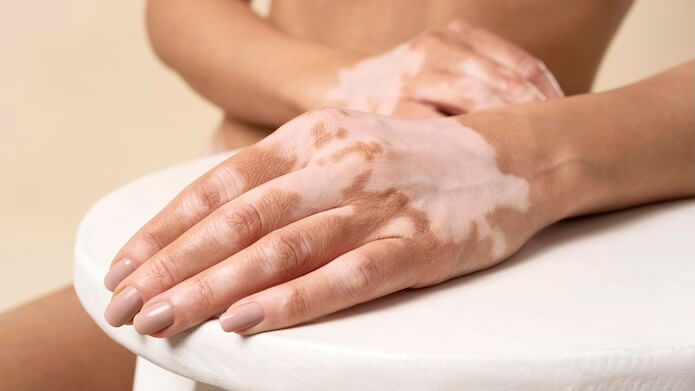
Vitiligo is an autoimmune disease that occurs when the immune system mistakenly attacks melanocytes, the cells that produce the pigment melanin. As a result, white spots are formed on the skin where there is a lack of melanin. This disease is characterized by the unpredictable appearance and spread of spots.
Vitiligo is a chronic skin disease that manifests as white patches on the skin caused by a lack of the pigment melanin. The disease affects people regardless of age, gender or skin tone, with an estimated prevalence of 0.5-2% of the world's population. Although vitiligo is not a life-threatening or contagious disease, it can cause a significant emotional and psychological burden on patients.
Vitiligo affects not only the skin, but also the patient's self-esteem and quality of life. In this article, we will take an in-depth look at the causes, symptoms, diagnosis, treatment of vitiligo, as well as recommendations for living with this disease.
What is vitiligo?
Vitiligo is an autoimmune disease that occurs when the immune system mistakenly attacks melanocytes, the cells that produce the pigment melanin. As a result, white spots are formed on the skin where there is a lack of melanin. This disease is characterized by the unpredictable appearance and spread of spots.
The severity and spread of the disease is highly variable. In some patients, the spots may be small and confined to a certain area, while in others, the disease may affect large areas of the skin, mucous membranes, and even hair, causing depigmentation in these areas as well.
Types of vitiligo
Vitiligo is divided into several types depending on how the disease manifests itself and spreads.
Generalized vitiligo
- The most common form.
- Spots appear symmetrically on both sides of the body.
- Affects multiple areas of the body, including hands, feet, face and joints.
- The disease can progress at different rates.
Segmental vitiligo
- Spots appear on one side of the body or in a specific area.
- More common in children and adolescents.
- Usually more stable than generalized vitiligo, less likely to spread to other parts of the body.
Focal vitiligo
- Spots are limited to a certain area.
- Usually does not spread further and remains local.
Universal vitiligo
- A rare form in which depigmentation affects almost the entire body.
- Associated with more severe autoimmune reactions.
Vitiligo causes and risk factors
Although the exact causes of vitiligo are not fully understood, scientists have identified several factors that may contribute to the development of the disease.
Autoimmune reaction
- Vitiligo is often associated with autoimmune diseases such as thyroid disorders, diabetes and rheumatoid arthritis.
- The immune system mistakes melanocytes as harmful and destroys them.
Genetic predisposition
- About 20-30% of patients have a family history of vitiligo or other autoimmune diseases.
- Several genes, such as TYR and NLRP1, are believed to be involved in the development of the disease.
Oxidative stress
- The accumulation of free radicals in the skin can damage melanocytes, contributing to depigmentation.
Triggers
- Sunburn, skin trauma, infections, or strong emotional stress are often considered triggers or aggravating factors.
Vitiligo symptoms
The main symptom of vitiligo is the appearance of white spots on the skin. The appearance and distribution of spots may vary depending on the type and severity of the disease.
Characteristic features:
- White spots: they can be of different sizes, with clear boundaries.
- Symmetry: In generalized vitiligo, the patches are often symmetrical.
- Mucosal involvement: vitiligo can affect the lips, gums and inside of the nose.
- Hair depigmentation: spots on the scalp can cause white hair to appear.
Disease progression:
- Spots can appear suddenly or gradually.
- In some patients, the disease stabilizes after a certain period of time, while in others it may progress throughout life.
Vitiligo diagnosis
Vitiligo is usually diagnosed based on clinical symptoms and the patient's medical history. Additional diagnostic methods help exclude other skin diseases and clarify the diagnosis.
Diagnostic methods:
- Clinical examination: the dermatologist visually assesses the appearance and location of the spots.
- Woods lamp test: ultraviolet light helps detect depigmentation that is not visible to the naked eye.
- Skin biopsy: in rare cases, to rule out other diseases, such as leukoderma.
- Blood tests: ai certain related autoimmune disorders such as thyroid diseases.
Vitiligo treatment
Although there is currently no cure for vitiligo, various treatments are available to help improve the appearance and reduce the impact of the disease on the patient's life.
Local therapy
- Calcineurin inhibitors: tacrolimus and pimecrolimus are suitable for sensitive skin areas such as the face and neck.
Phototherapy
- Narrowband UVB therapy: one of the most effective methods for stimulating melanocytes and re-pigmentation.
- PUVA therapy: combines psoralen with UVA radiation, but has a higher risk of side effects.
Systemic therapy
Surgical treatment
- Skin grafting: transfer of pigmented skin to depigmented areas.
- Melanocyte transplantation: transfer of melanocyte cells to areas of white spots.
Depigmentation therapy
- In severe cases where pigmentation has been lost over a large part of the body, depigmentation therapy (eg with monobenzone) can even out the skin tone.
Cosmetic coating
- Foundations and self-tanning products can help mask white spots.
Quality of life and emotional health
Vitiligo often causes emotional stress, anxiety and low self-esteem. The appearance of white spots, especially in visible areas such as the face and hands, can lead to social problems and discrimination.
Support measures:
- Psychological support: psychotherapy and support groups help patients cope with emotional challenges.
- Education and public awareness: public education about vitiligo helps reduce stigma and improve patient integration.
Prevention and lifestyle recommendations
Although vitiligo cannot be cured, there are ways to reduce the severity of symptoms and improve skin health.
Tips for skin care:
- Sun protection: use sunscreen to prevent sunburn and even out skin tone.
- Avoiding skin trauma: trauma such as scratches or bruises can cause new spots to appear (Koebner's phenomenon).
- Healthy diet: a diet rich in antioxidants can reduce oxidative stress and support skin health.
Future therapies
Vitiligo research is actively developing, and new therapeutic solutions offer hope for more effective control of the disease:
- Gene therapy: research on the stimulation of melanocyte regeneration and the possibilities of correcting genetic mutations.
- 3D leather printing: the development of technology could offer new opportunities for melanocyte transplantation.
Conclusions
Vitiligo is a complex and emotionally affecting disease that requires a personalized approach to its treatment and management. Although the disease is currently incurable, modern treatment methods and psychological support can significantly improve the quality of life of patients. For vitiligo patients, it is essential to be educated about the disease, regularly consult a dermatologist, and practice skin care in order to successfully manage the symptoms and impact of the disease on daily life.