Is Graves' disease dangerous? How to avoid serious consequences!
Graves' disease is an autoimmune disease that causes an overactive thyroid gland. Learn about its symptoms, diagnosis, treatment, and lifestyle recommendations.
Graves' disease is an autoimmune disease that causes an overactive thyroid gland, or hyperthyroidism. This disease is one of the main causes of hyperthyroidism and most often affects women between the ages of 20 and 40. In this article, we'll look at the causes, symptoms, diagnosis, and treatment options for Graves' disease to help you better understand the disease and how to live with it.
What is Graves' disease?
Graves' disease is a form of autoimmune disorder in which the immune system mistakenly attacks the thyroid gland, causing it to overproduce the hormones thyroxine (T4) and triiodothyronine (T3). These hormones regulate metabolism and many other body functions, such as heart rate, body temperature, and nervous system activity. Excess hormone production can lead to hyperthyroidism, which in turn causes various symptoms and complications.
Graves' disease is the most common cause of hyperthyroidism and affects about 1% of the population. It is more common in women, and genetic factors significantly affect the risk of developing the disease.
Graves' disease is named after the British physician Robert Graves, who first described the symptoms of this autoimmune condition and its association with hyperthyroidism in the 19th century. Graves was one of the first physicians to detail an overactive thyroid in autoimmune disorders. Because of his contributions, the disease is now called Graves' disease in recognition of his role in researching and better understanding the disease.
The role of the thyroid gland in the body
The thyroid gland is a butterfly-shaped gland located at the front of the neck, just below the Adam's apple in men. It produces two main hormones, thyroxine (T4) and triiodothyronine (T3), which regulate the body's metabolism. These hormones are responsible for maintaining the body's energy levels, regulating heart rate, controlling body temperature, and even keeping the brain functioning. When the thyroid gland becomes overactive, it can affect many functions in the body, causing a wide range of negative symptoms.
Causes and risk factors for Graves' disease
Graves' disease is an autoimmune disease, which means that the immune system mistakenly attacks the body's own cells. In this case, the immune system produces antibodies that stimulate the thyroid gland to produce more hormones than necessary. There are several causes and risk factors that can contribute to the development of Graves' disease:
- Genetic predisposition: Graves' disease is often associated with a family history. If one of the parents or close relatives has had this disease, then the risk of getting it is higher.
- Sex and age: Graves' disease is more common in women, and the risk of developing it is higher between the ages of 20 and 40.
- Stress: Prolonged physical or emotional stress can promote an autoimmune response and increase the risk of developing Graves' disease.
- Smoking: Smoking is associated with an increased risk of Graves' disease, especially developing eye complications (exophthalmos).
What are the symptoms of Graves' disease?
The symptoms of Graves' disease can be varied and are mainly related to an overactive thyroid gland. Symptoms may include:
- Fast heartbeat (tachycardia): the heart beats faster than normal, often exceeding 100 beats per minute.
- Weight loss: despite increased appetite, patients often lose weight.
- Excessive sweating and heat intolerance: patients often experience excessive sweating and heat intolerance.
- Nervousness, anxiety and irritability: increased hormone levels can cause psycho-emotional changes.
- Tremor: hands, fingers or body may tremble, making it difficult to carry out daily activities.
- Fatigue and muscle weakness: Muscles, especially in the thighs and shoulders, may become weaker.
- Menstrual disorders: Women may experience menstrual changes, such as less heavy or less frequent periods.
- Eye problems (exophthalmos): one of the most characteristic signs of Graves' disease is bulging of the eyes, or exophthalmos, which can cause eye irritation, dryness and impaired vision.
It is important to consult an endocrinologist or family doctor if symptoms of Graves' disease appear or if a thyroid disorder is suspected. The doctor will be able to examine the examinations performed by the patient, as well as help to choose the most appropriate treatment methods.
Diagnosis of Graves' disease
In the diagnosis of Graves' disease, several methods are used to confirm the diagnosis and determine the severity of the disease:
- Blood tests: Thyroid hormone (T3 and T4) levels are checked, as well as thyroid-stimulating hormone (TSH) levels. In Graves' disease, TSH is usually low (below 0.4 mIU/L), while T3 (above 200 ng/dL) and T4 (above 12 µg/dL) are elevated. Specific antibodies, such as TSH receptor antibodies (TRAb), which are characteristic of Graves' disease, are also detected.
- Radioactive iodine uptake test: This test helps evaluate thyroid activity using a small amount of radioactive iodine. In Graves' disease, the thyroid gland takes up more iodine than normal.
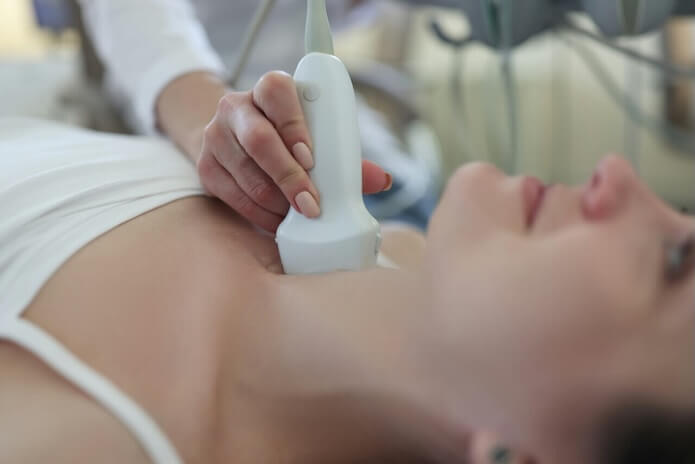
- Thyroid ultrasound: Ultrasound is used to evaluate the structure of the thyroid gland and determine the presence of nodules that may be associated with disease.
It is definitely recommended to discuss the results of blood tests and examinations with an endocrinologist, family doctor, to ensure a quality approach to treatment.
What are the complications of Graves' disease?
Untreated Graves' disease can cause several serious complications that affect the patient's quality of life:
- Heart problems: Graves' disease can cause heart problems, such as heart failure, tachycardia, and atrial fibrillation, which increase the risk of stroke.
- Eye problems: exophthalmos, which is common in Graves' disease, can cause visual disturbances, eye irritation, double vision, and even vision loss.
- Bone loss (osteoporosis): Increased levels of thyroid hormones can affect calcium metabolism, causing bone loss and increasing the risk of fractures.
- Hyperthyroid crisis (English: thyroid storm, also known as a thyrotoxic crisis): this is an emergency condition that can occur if Graves' disease is left untreated. It is characterized by highly elevated hormone levels that cause severe tachycardia, fever, and even loss of consciousness. This requires immediate medical attention.
Treatment and control of Graves' disease
Treatment for Graves' disease depends on the patient's age, the severity of symptoms, and other factors. There are several treatment options that your doctor may choose depending on your individual circumstances:
- Radioactive iodine: Radioactive iodine therapy is a popular treatment for Graves' disease that uses radioactive iodine to destroy thyroid cells by reducing hormone production. After this therapy, thyroid function is often significantly reduced and patients require hormone replacement therapy.
It is important to consult an endocrinologist or family doctor if symptoms of Graves' disease appear or if a thyroid disorder is suspected. The doctor will be able to examine the examinations performed by the patient, as well as help to choose the most appropriate treatment methods.
Lifestyle recommendations for Graves' disease patients
- Nutrition: Graves' disease patients are advised to pay attention to a healthy and balanced diet. Avoid excessive consumption of iodine, as this may contribute to the worsening of the symptoms of the disease. Choose foods high in calcium and vitamin D, such as dairy products (milk, cheese, yogurt), broccoli, spinach, salmon, and sardines to prevent osteoporosis.
- Regular physical activities: Physical activity helps maintain muscle strength, improve heart rate, and reduce stress. It is important to choose moderate-intensity activities such as walking, cycling or yoga.
- Stress management: Stress can worsen Graves' disease symptoms, so it's important to learn how to manage it. Use relaxation techniques such as meditation, breathing exercises, or yoga to reduce anxiety and improve your overall well-being.
- Regular medical check-ups: it is important to see your doctor regularly to monitor your thyroid function and adjust your treatment as needed. This will help to identify changes in time and take the necessary corrective measures.
Conclusion
Graves' disease is a serious autoimmune disease that causes an overactive thyroid gland and can significantly affect the patient's quality of life. With timely diagnosis and proper treatment, as well as lifestyle adjustments, it is possible to control the symptoms of the disease and avoid serious complications. It is important to be aware of your health and work closely with your treating physician to ensure effective disease control and improve your quality of life.
Additional materials
- Gita Erta: Thyroid underfunction or hypothyroidism(Source: arsts.lv)
- Una Gailiša: The thyroid gland and its diseases (Source: arsts.lv)
- Thyroid dysfunction in psychiatric practice (Source: Doctus)