All about chickenpox - causes, symptoms and the most effective treatments!
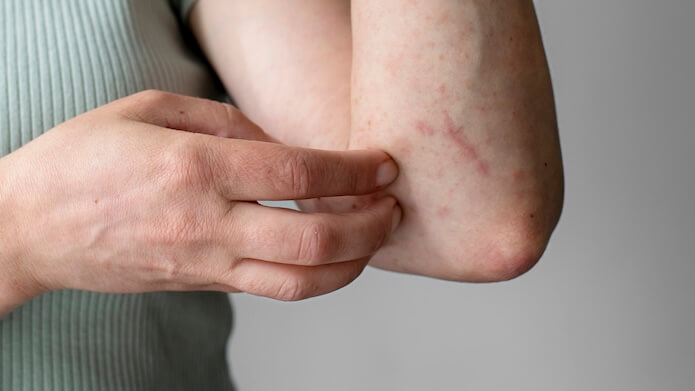
Chickenpox is an acute, highly contagious disease caused by the Varicella zoster virus, a member of the herpes virus family. It is characterised by fever, fatigue and a rash that starts as papules and progresses to vesicles, which later become crusts. The disease is spread mainly through direct contact with infectious people or air droplets containing the virus. The incubation period is usually between 10 and 21 days.
Chickenpox, medically known as Varicella, is a highly contagious infectious disease caused by the Varicella zoster virus (VZV). The disease mainly affects children, but it can also affect adults, especially those who are not immune to the virus. This article will discuss in detail the symptoms, diagnostic methods, treatment options, possible complications and prevention strategies of chickenpox, focusing on proven medical facts and guidelines.
What is chickenpox?
Disease definition
Chickenpox is an acute, highly contagious disease caused by the Varicella zoster virus, a member of the herpes virus family. It is characterised by fever, fatigue and a rash that starts as papules and progresses to vesicles, which later become crusts. The disease is spread mainly through direct contact with infectious people or air droplets containing the virus. The incubation period is usually between 10 and 21 days. Chickenpox is most common in children aged 5 to 9 years, but can also affect people of any age, especially those who have not been vaccinated or have not acquired immunity after previous infection.
History and distribution
Chickenpox has been around for many centuries, with the first documented signs of the disease dating back to the 16th century. However, the disease itself was only accurately understood in the early 20th century, when Johns Hopkins University researcher Herbert Kopf discovered that the Varicella zoster virus was the causative agent. Since then, the prevalence of the disease has been significantly reduced thanks to the introduction of vaccines. Public health organisations such as the World Health Organisation (WHO) have promoted vaccination, which has significantly reduced the incidence of chickenpox in developed countries. However, the disease is still prevalent in many parts of the world where vaccination is not widely available or vaccination coverage is low. According to the WHO, before the introduction of vaccination programmes, more than 90% of people worldwide had chickenpox by the age of 15, but current vaccination programmes have helped to reduce the incidence by more than 85% in developed countries.
Symptoms of chickenpox
Initial symptoms
The initial symptoms of chickenpox usually appear 1 to 2 days before the rash develops. They may include a slight fever, tiredness, headache and loss of appetite. These non-specific symptoms are often confused with signs of other viral infections, which can delay a correct diagnosis. Fever is usually mild, rarely exceeding 38.5°C, but may be more pronounced in some individuals, especially adults. The severity of these symptoms may vary depending on the age and immune status of the patient. It is important to note that these initial symptoms are more pronounced in adults, while in children they are often mild or even absent.
Development and signs of a rash
Rash is the most obvious symptom of chickenpox, usually starting 1 to 2 days after the initial symptoms. They develop as red papules that quickly turn into itchy vesicles filled with fluid. These vesicles can appear on any part of the body, but most commonly involve the face, torso and extremities. The rash usually spreads in stages, so there can be both new and advanced vesicles at the same time. Vesicles can range in number from 250-500 elements, but their severity can vary, being less in vaccinated individuals. The development of the rash usually takes about 5-7 days, after which the vesicles begin to dry out and form crusts, which fall off after 1 to 2 weeks. The itching of the rash can be very intense, which can lead to scratching and the risk of secondary bacterial infections, especially in children.
Diagnostic methods
Physical examination
The diagnosis of chickenpox can often be made on the basis of clinical presentation and typical rash. The doctor performs a thorough physical examination, paying attention to the distribution and pattern of the rash and taking a detailed history of possible contact with other infected individuals. The appearance and sequence of the rash is often sufficient to make a diagnosis without the need for further tests. However, in some cases, such as when the rash is not characteristic or when other pathology is suspected, additional diagnostic measures may be necessary.
Laboratory tests
Laboratory tests can be used to confirm a diagnosis of chickenpox, especially in cases where the clinical examination is not clear enough. The most common test is the polymerase chain reaction (PCR), which can identify VZV DNA in rash material or other biological fluid samples. PCR testing is highly specific and sensitive, providing a rapid and accurate diagnosis. In addition, serological tests such as enzyme-linked immunosorbent assay (ELISA) can detect antibodies to VZV to confirm immunity due to previous infection or vaccination. However, these serological tests are less useful in the diagnosis of acute infection, as antibodies may only appear after several days or weeks.
Treatment options
Home care and prevention
Home care is an important aspect of chickenpox treatment, especially in mild cases. Patients are advised to stick to rest and adequate fluid intake. Itching can be relieved by using cool baths with oatmeal products and wearing light, loose-fitting clothes that do not scratch the skin. It is important to avoid scratching to reduce the risk of bacterial infection. Prevention involves limiting contact with others to prevent the spread of the disease until all vesicles have become crusts. Vaccination is the most effective way to prevent chickenpox. The WHO and CDC recommend routine vaccination of children with two doses, which offers long-lasting protection against VZV.
Complications and prevention
Possible complications
Although chickenpox is usually benign, especially in children, it can cause serious complications in some cases. These complications can include bacterial skin infections, pneumonia, encephalitis and, less commonly, secondary infections of the central nervous system. Adults and immunocompromised patients are at higher risk of serious complications. In pregnant women, chickenpox can cause congenital varicella syndrome, which can lead to the risk of foetal malformations and other serious health problems. Any of these complications requires urgent medical intervention. In addition, patients who are infected with VZV are at risk of developing herpes zoster (shingles) later in life, as the virus can remain latent in the nerve ganglia.
Vaccination and prevention strategies
Vaccination is the main preventive measure against chickenpox. The World Health Organisation and the CDC recommend a two-dose vaccination schedule, which is approximately 90% effective against chickenpox. Vaccination is recommended for all children, with the first dose usually given between 12 and 15 months of age and the second dose between 4 and 6 years of age. Vaccination is also recommended for adults who are not immune to chickenpox, especially those who are at high risk of infection. In addition to vaccination, preventive measures include hygiene, such as regular hand washing and limiting contact with infected individuals. For those at high risk, such as pregnant women or immunocompromised people, passive immunisation, such as Varicella zoster immune globulin (VZIG), may be considered to reduce the severity of the disease after exposure to the virus.
Additional preventive measures
In addition to vaccination and contact restriction, there are several other measures that can help prevent the spread of chickenpox. Family members and caregivers should maintain strict hygiene and ensure that infected individuals have access to certain hygiene items such as towels and clothes. Educational institutions and workplaces may consider temporary remote arrangements in case of infection to reduce the possibility of virus spread. Another effective strategy is public education on the symptoms of chickenpox and the importance of vaccination, which can facilitate early recognition and treatment and increase vaccination coverage.